Direct answer
Choose mesh tarp material when the load needs containment with airflow, such as many dry aggregate or landscape materials. Choose solid vinyl tarp material when water resistance and shielding from weather are central to the load requirement. Neither choice is universal: the correct truck cover also depends on the load, truck dimensions, local rules, cover mechanism, reinforcement, hardware and fabrication method. Confirm the material through a sample and finished-cover design review before ordering.
Introduction
“Should I use mesh or vinyl for a dump truck tarp?” is a cover-system decision. The material must suit the load and work with the truck body, roller or arm system, pockets, hems, grommets, straps and operating routine. This guide helps operators, fabricators and procurement teams ask the right questions before buying roll goods or a finished cover.
1. Start with the load and operating conditions
The material should be selected for what the truck carries, how it is loaded and unloaded, and what weather or handling conditions it will encounter. Start with a short job profile before asking for a quote.
Questions to answer before selecting a tarp
- What material is being hauled: dry aggregate, sand, gravel, landscaping material, demolition debris, agricultural material, asphalt or another load?
- Does the load need airflow, moisture protection, dust containment or a combination of those needs?
- Is the load hot, abrasive, sharp-edged, wet or prone to sticking?
- How often will the cover be opened, closed, folded or rolled in a typical day?
- What truck body dimensions and cover system are used?
- Are there jobsite, customer, insurer or local transport requirements that affect coverage?
- Will a finished tarp fabricator sew, reinforce and fit the material, or is the buyer purchasing fabric rolls for in-house conversion?
These details give a fabric supplier and tarp fabricator the context needed to discuss an appropriate construction. For example, “mesh tarp for gravel truck” is more useful when it also states the bed size, fabricator’s finishing method, whether the tarp will be rolled, expected exposure and required delivery location.
Include the route and operating cycle in the brief. Short urban trips and long highway routes can expose a cover to different wind, weather and opening cycles. This lets suppliers clarify whether they are quoting a roll material, a candidate construction or a fabricated cover.
2. Mesh and vinyl solve different problems
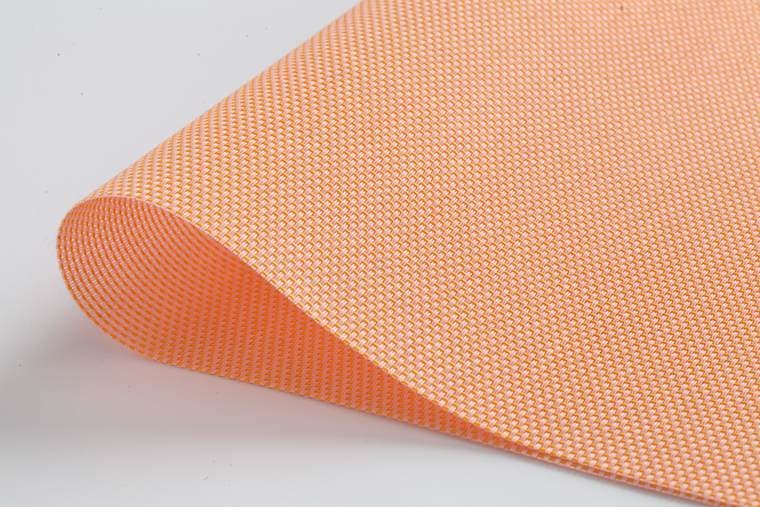
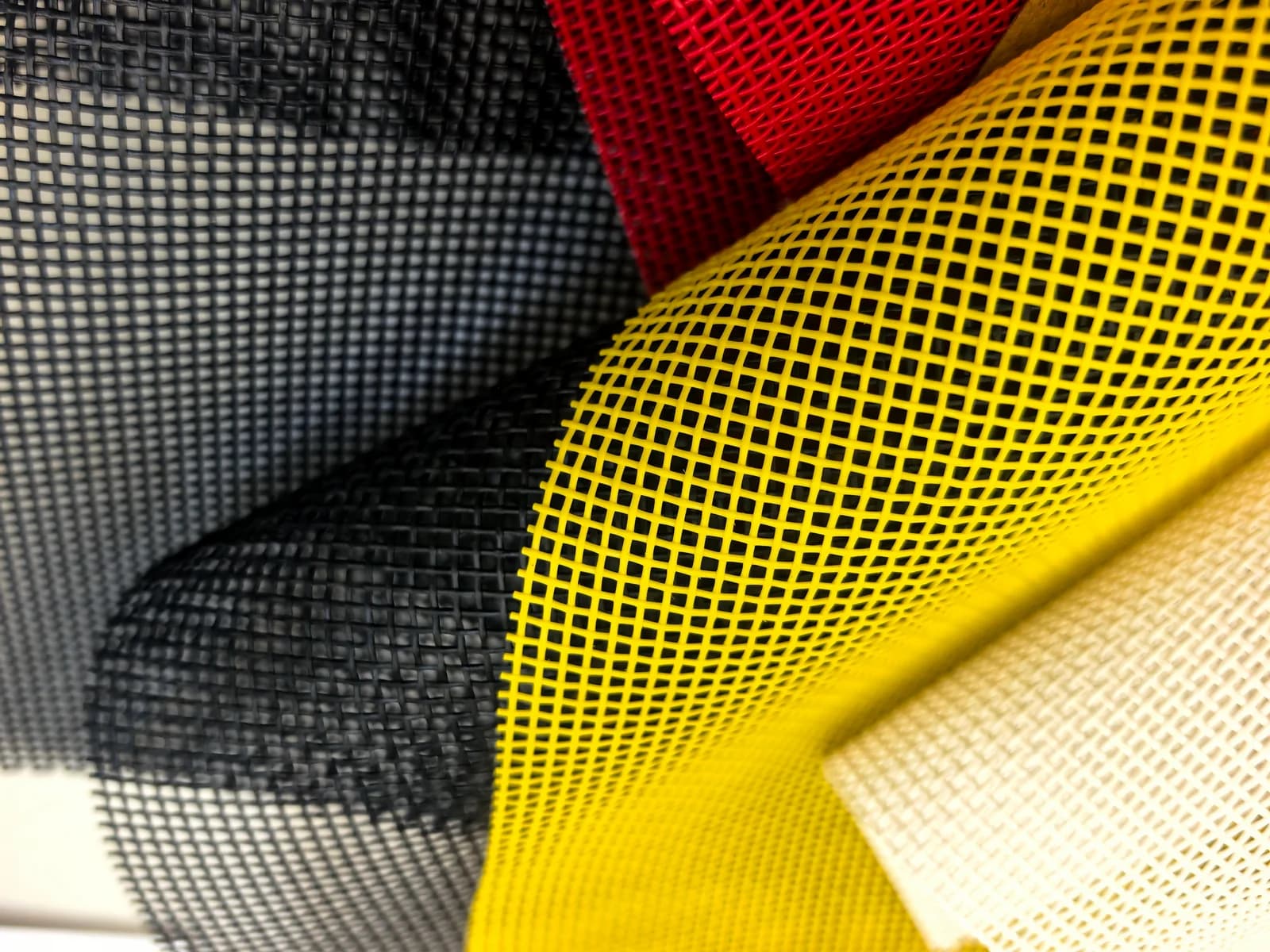
The basic distinction is straightforward. Mesh contains while allowing air to pass through its openings. Solid vinyl is intended to create a more continuous barrier. The design of the finished tarp, seams and mounting system still affects the real-world outcome.
| Decision factor | Mesh tarp material | Solid vinyl tarp material | What to confirm before purchase |
|---|---|---|---|
| Airflow | Open construction allows air to pass through. | Continuous surface limits airflow through the material. | Whether wind passage is helpful or undesirable for the load. |
| Rain and moisture | Mesh is not a waterproof cover. | Vinyl may be selected when rain protection is required. | Whether the whole finished system needs weather sealing, including seams and edges. |
| Dry bulk coverage | Often considered for dry loads that need containment with ventilation. | May be used where a more closed barrier is required. | Particle size, dust behavior and expected exposure. |
| Heat and load condition | Suitability depends on the exact fabric and the load temperature. | Suitability also depends on the specific product and load temperature. | Ask for material-specific guidance; do not assume a generic tarp label is enough. |
| Cover-system behavior | Open construction can change wind response and handling. | Solid construction changes wind response and water shedding. | Roller direction, tension, reinforcement and attachment points. |
| Cleaning and maintenance | Debris can lodge in openings depending on the load. | Surface cleaning and drainage needs depend on the finished design. | Cleaning routine and storage condition between trips. |
The table is a selection framework, not a specification. Mesh is not automatically “better” for every dry load, and vinyl is not automatically the answer whenever rain is possible. The material must be matched to the cargo, required protection level and complete cover design.
When mesh is often the starting point
Truck mesh tarps are often evaluated for dry, loose materials where containment and air passage are both important, such as aggregate, gravel, stone or landscape materials. Describe the load rather than relying on “dump truck mesh”; fine dusty loads and coarse stone can require different discussions about openness, reinforcement and attachment points.
When vinyl is often the starting point
Solid vinyl is commonly considered when the cargo needs protection from rain, splashing or moisture exposure. A vinyl cover is not automatically waterproof as a full system: seams, hems, hardware openings, truck-body geometry and tension all affect water management.
3. Select the fabric only after reviewing the tarp design
Roll material is one part of the finished tarp. A professional selection includes the conversion and installation preparation required to turn it into a cover that can be operated repeatedly.
Map the truck body and cover mechanism
Before a fabric order or a finished-cover quotation, prepare:
- Truck bed length, width and side height
- Required coverage area and any overlap allowance
- Roller, cable, arm, crank or electric-system arrangement
- Direction of travel when opening and closing the tarp
- Front and rear attachment points
- Locations of expected abrasion or contact with the truck body
- Required pockets, hems, webbing, reinforcement panels, grommets or straps
Photographs and a dimensioned sketch often identify where the material needs reinforcement and prevent ordering by bed length alone without allowance for side coverage, hems, pockets and cover mechanics.
Consider fabric conversion from the start
Tell the supplier and fabricator how the material will be converted. A new or customized tarp may need a seam trial or prototype. Inspect it in the operating position for coverage, rolling or folding, hardware alignment and unexpected corner tension.
4. Evaluate mesh construction against the actual load
For mesh tarp fabric, openings and weave affect airflow, containment and handling. Translate the needed outcome into a construction discussion rather than guessing from a product photograph.
Give the supplier useful load information
Tell the supplier whether the load is:
- Fine or coarse
- Dry, damp or wet
- Abrasive or sharp
- Likely to create dust
- Loaded from height or with equipment that may contact the cover
- Used in an environment with frequent wind or rain
If an existing tarp works or fails, share photos of the material, edges and failure point. A worn edge may be an attachment or abrasion issue, while a torn center panel calls for a different review.
Avoid blanket coverage claims
Containment and airflow depend on construction, load behavior, cover fit and truck movement. Do not describe mesh as waterproof; if rain protection matters, state it so the supplier can discuss solid material or a different system design.
5. Evaluate vinyl for the job it must protect
When a buyer is considering vinyl, the key question is not simply “is it strong?” It is what type of protection is needed and how the tarp will be fabricated and used.
Define the protection objective
Write down whether the project needs:
- Protection from rain during ordinary transport
- Reduced exposure to spray or road conditions
- Coverage for a moisture-sensitive load
- A closed cover for material containment
- A particular appearance, color or identification treatment
The required outcome guides the vinyl construction, seams, hem treatment and cover geometry. Name significant temperature, abrasion or chemical exposure early and ask for material-specific advice.
Review water management as a whole-system issue
Water can enter through unfinished edges, seams, hardware penetrations or poor fit. During installation preparation, review water shedding, tarp tension and pockets that may collect debris or moisture.
6. Build inspection into the order, not after delivery
Before shipping, inspect the order against the agreed sample, purchase order and packing instructions. The inspection level should fit the risk of a stock roll order, custom construction or first-time development.
A practical pre-shipment inspection checklist
For roll material, the buyer or appointed inspector can review:
- Product code and color against the approved reference
- Visible surface condition and obvious damage
- Nominal width and agreed measurement method
- Roll count, roll identification and lot traceability if agreed
- Core, wrap, end protection and pallet condition
- Packing list, shipping marks and destination labels
For a fabricated tarp, add checks for dimensions, hems, pockets, reinforcements, hardware and operation. Retain the approved swatch, product code, drawing and packing photos as the repeat-order reference.
7. What to send when requesting a truck tarp material quotation
A clear request makes supplier replies comparable. Include:
Ask the supplier to state what they are quoting: a candidate roll material, a custom fabric development or a finished cover. That distinction keeps the commercial conversation honest and makes it easier to assign responsibility for conversion and installation.
Common mistakes in truck tarp selection
Choosing by material name alone
“Mesh tarp” and “vinyl tarp” describe broad material directions. They do not define the load, construction, reinforcement or finished-cover design. Start from the truck’s operating need and work back to the material.
Expecting a mesh cover to provide waterproof protection
Mesh has openings by design. It may be suitable for containment and airflow, but it should not be presented as a waterproof solution. If weather protection matters, evaluate solid material and the full cover system.
Ignoring the conversion and installation plan
The weakest part of a cover may be an edge, seam, grommet or attachment point rather than the center fabric. Involve the fabricator and review the operating mechanism before placing a material order.
Ordering only by truck-bed length
Finished-cover dimensions require allowances for width, side coverage, hemming, pockets, reinforcement and attachment geometry. Use a dimensioned drawing or existing cover as the basis for the quotation.
Treating shipment inspection as an emergency step
Agree the sample, product reference, packing and inspection checklist before production. Then the shipment review can confirm the agreement rather than solve a new specification problem.
FAQ
Is mesh or vinyl better for a dump truck tarp?
Neither is always better. Mesh is often considered where a dry load benefits from containment with airflow. Solid vinyl is often considered where weather protection or a more closed barrier is important. The load, route, cover design, truck system and fabrication method determine the correct choice.
Are mesh dump truck tarps waterproof?
No. Mesh has openings that allow airflow and does not provide waterproof coverage. If rain protection is a requirement, discuss a solid material and review the complete tarp system, including seams, edges and attachment points.
What information does a truck mesh tarp supplier need for a quote?
Provide the truck type, load type, bed dimensions, cover-system photos, conversion method, required color, expected quantity, delivery destination and any specific exposure or documentation requirement. A sketch or photos of the existing tarp system can speed up the review.
Can I buy truck tarp fabric by the roll for local fabrication?
Yes, roll-material sourcing is a practical route when you have a local tarp fabricator or in-house conversion process. Confirm the needed width, roll format, construction, color, packing and the fabricator’s intended seam and reinforcement method before ordering.
Should I ask for a sample before ordering truck cover material?
For a new material, custom color, unfamiliar construction or important conversion requirement, a sample is strongly useful. Test it with the intended hem, seam, reinforcement or hardware arrangement where possible. For a finished cover, a prototype or pre-production review may be appropriate.
Conclusion
Mesh and vinyl tarp materials should be chosen for the job the truck cover must perform. Start with the cargo, operating conditions and protection objective. Then review the truck body, opening mechanism, conversion method and installation preparation before deciding on a material.
A well-documented brief, representative sample and agreed inspection plan make the buying decision more reliable. They also help fabric suppliers and tarp fabricators state exactly what they are providing, which reduces surprises during fabrication and shipment.