Direct answer
For sling chairs and sun loungers, start with a PVC-coated polyester mesh designed for tensioned seating, then confirm the actual construction against the frame, user load, climate, color requirement and conversion method. A suitable material needs controlled stretch, breathable openness, weather resistance and a stable edge during sewing or heat-welding. Do not approve a mesh from a photograph or generic GSM alone: review a labeled sample on the intended frame and request product-specific data before production.
Introduction
Outdoor furniture buyers often begin with the wrong question: “Which fabric color should we choose?” Color matters, especially in retail collections and hospitality programs, but it is rarely the first technical decision. A sling chair is a tensioned system. The frame geometry, attachment method, user weight, seat angle, climate and cleaning expectations all affect how the mesh should be selected.
PVC-coated polyester mesh is widely used for outdoor sling chairs, chaise lounges and poolside seating because it can combine airflow, drainage and a firm hand with a coating system that is practical to clean. It is not a single universal material. Two meshes can look similar in a swatch book while behaving differently once stretched over a frame. A more open construction may feel cooler but reveal the frame or reduce privacy. A dense construction may give a more substantial appearance but change seating feel, heat retention and drying behavior. Edge construction can decide whether a roll is easy to convert into a dependable finished sling.
For a B2B buyer, the goal is not to find “the best mesh” in the abstract. The goal is to build a product brief that a supplier can turn into the right sample and, later, a controlled production specification. This guide explains the questions worth answering before you request a quotation.
Start with the finished chair, not the material name
Ask the product team for a finished-product brief before requesting any roll sample. A complete brief normally includes:
- The furniture type: dining chair, recliner, sun lounger, beach chair, folding chair or contract seating.
- A frame drawing or physical frame sample, including the attachment method.
- The tension direction, seat span and back span.
- The intended user profile and the expected duty cycle.
- The sales market and outdoor exposure: residential patio, hotel pool deck, coastal resort, restaurant terrace or commercial rental fleet.
- The required color, visual openness, texture and any matching cushion or powder-coat palette.
- The conversion process: sewing, welted edge, keder, stapling, heat-welding or another method.
This is the same discipline used during good sample coordination. A mesh may be appropriate for a relaxed residential chaise lounge but not for a restaurant chair that is moved dozens of times each day. Likewise, a fabricator may need a different edge behavior from a furniture producer that uses a different attachment method. The fastest way to receive an irrelevant quote is to send only “PVC mesh, black, for chair.”
What the material name does and does not tell you
PVC-coated polyester mesh usually refers to polyester yarns protected with a PVC coating and woven into an open structure. In B2B conversations, buyers may also use generic terms such as vinyl mesh fabric, outdoor furniture mesh, sling fabric or Textilene-type fabric. These names help start a search, but they do not replace a specification.
Textilene® is a trademarked material name. When sourcing a non-branded equivalent category, use a generic description such as “PVC-coated polyester mesh” or “Textilene-type fabric,” then define the actual construction and performance requirements. This keeps the RFQ clear and avoids asking a supplier to make an unsupported equivalence claim.
The seven selection criteria that matter most
1. Tension retention and dimensional stability
The key question for a sling is not simply tensile strength. It is whether the selected construction retains a controlled shape after being tensioned on the chosen frame. Excessive elongation can lead to a sagging seat, a loose backrest or an inconsistent fit from one chair to the next. A mesh can be strong in a laboratory pull test and still be unsuitable if its construction does not remain stable in the required direction.
Ask the supplier how the sample should be oriented on the frame. Mark warp and weft directions on the sample. If the chair has a long seat span, evaluate the material in that exact direction. During a pre-production trial, assess fit after initial tensioning and again after an agreed conditioning period. The point is not to promise a universal performance result; it is to catch a mismatch before a full run is cut.
2. Openness, airflow and seating comfort
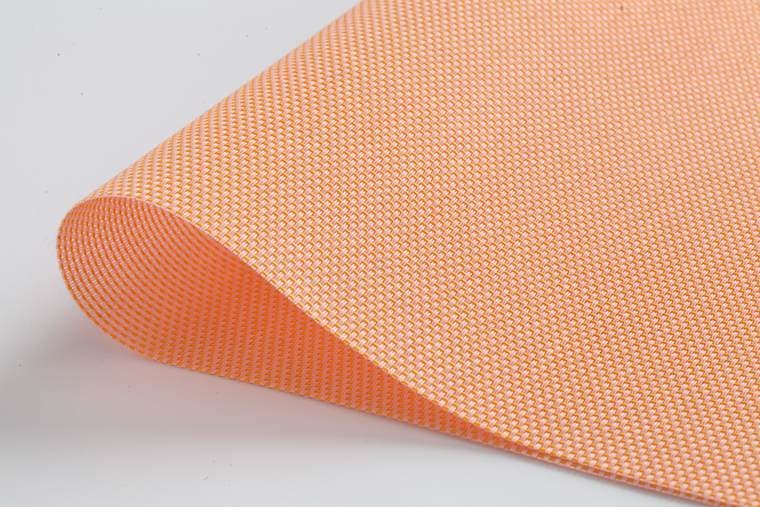
Open mesh supports ventilation and water drainage. This is particularly valuable for poolside seating, humid climates and furniture that stays outdoors after rain. Openness also changes the appearance of the chair. An open weave can make a modern frame look lighter, while a denser weave can provide a more upholstered visual effect.
Compare options on the actual frame outdoors, not only under a showroom light. Look at the seat from normal viewing distance, then sit on it. Check whether the frame shows through, whether the surface feels appropriate against clothing or skin, and whether the selected color changes significantly when light passes through the weave. For a hospitality program, ask whether cleaning staff will need a smoother surface for frequent wipe-downs.
3. UV, weather and moisture exposure
Outdoor furniture has to handle more than sunlight. Consider heat, rain, salt air, chlorinated pool environments, dust, sunscreen and regular cleaning. A supplier should confirm what is available for the actual product reference and target market instead of making a blanket weather-resistance claim.
Build the climate into your evaluation plan. A coastal resort buyer may prioritize cleaning and exposure review. A distributor selling into high-UV regions may prioritize retention of appearance after exposure. If a project requires a named test method, a target standard or a compliance document, put it in the RFQ and request confirmation before approval. Do not assume that an option available in one construction is automatically available in another.
4. Color, texture and collection consistency
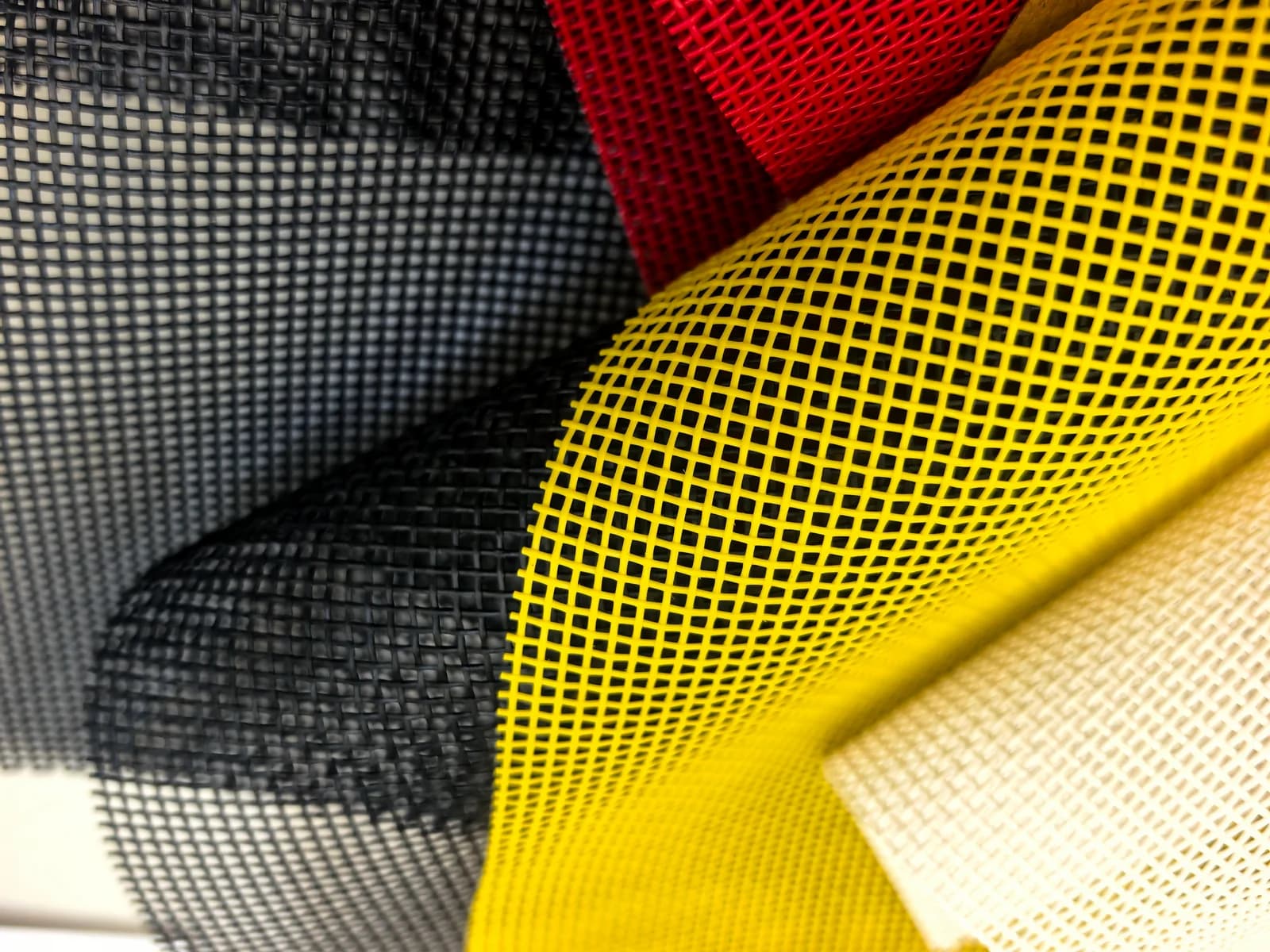
Color is a commercial decision with technical consequences. Dark shades may make a visual statement but can feel warmer in direct sun. Light shades may show staining sooner in high-traffic environments. Patterned or textured constructions can help a seating collection stand apart, but they should be reviewed at production-scale repeat, not only as a small cut piece.
For a multi-SKU range, create a color approval workflow. Start with a material direction, compare a lab dip or sample against the frame and adjacent materials, then approve a retained standard. State the tolerance and approval process in writing. This gives the factory, the buyer and shipment-inspection team the same reference point.
5. Surface cleanability and mildew-management expectations
PVC-coated mesh is often selected because it is practical to wipe and rinse. That does not mean every staining, cleaning chemical or storage condition can be ignored. In a poolside or food-service application, tell the supplier which cleaning agents, sunscreen residue or food-contact risks are common. For furniture stored wet or packed before it is fully dry, discuss the packing and handling plan as well as the material.
Use precise language. “Mildew resistant” or “easy to clean” should be tied to the product reference, use condition and care instructions. It should not become an unlimited promise in a catalog or sales claim.
6. Conversion and edge performance
The best-looking mesh can become a difficult production material if the edges fray, curl, shift under the sewing foot or fail to work with the planned attachment method. Ask for a sample large enough for the factory or fabricator to run through the intended conversion process. A chair-frame sample is more useful than a desk review of a small color chip.
Include these details in the brief:
- Finished sling width and cut direction.
- Seam, hem or spline/keder construction.
- Required edge reinforcement or binding.
- Any punching, heat-welding or reinforcement areas.
- Whether the fabric will be tensioned manually, mechanically or through a formed channel.
7. Compliance, testing and documentation
Testing should follow the application, target market and customer requirement. A well-run sourcing process identifies the actual test need before a buyer asks for a generic “certificate.” For example, a contract project may require specified flame-retardant documentation, while a furniture importer may be focused on restricted substances, color approval or performance information for the selected SKU.
Ask for available product-specific documentation rather than assuming every construction has the same package. AOLEADER's product information indicates that REACH-related documentation and NFPA 701 or DIN 4102-B1 options may be available for selected products. Confirm applicability, test method, scope and current validity for the exact material before using any statement in a customer submission.
A practical selection matrix for common outdoor seating
| Application | First questions to answer | What to review on the sample | Common mistake to avoid |
|---|---|---|---|
| Dining sling chair | Frame span, repeated movement, edge construction | Tension retention, seat comfort, sewing behavior | Choosing only by color card |
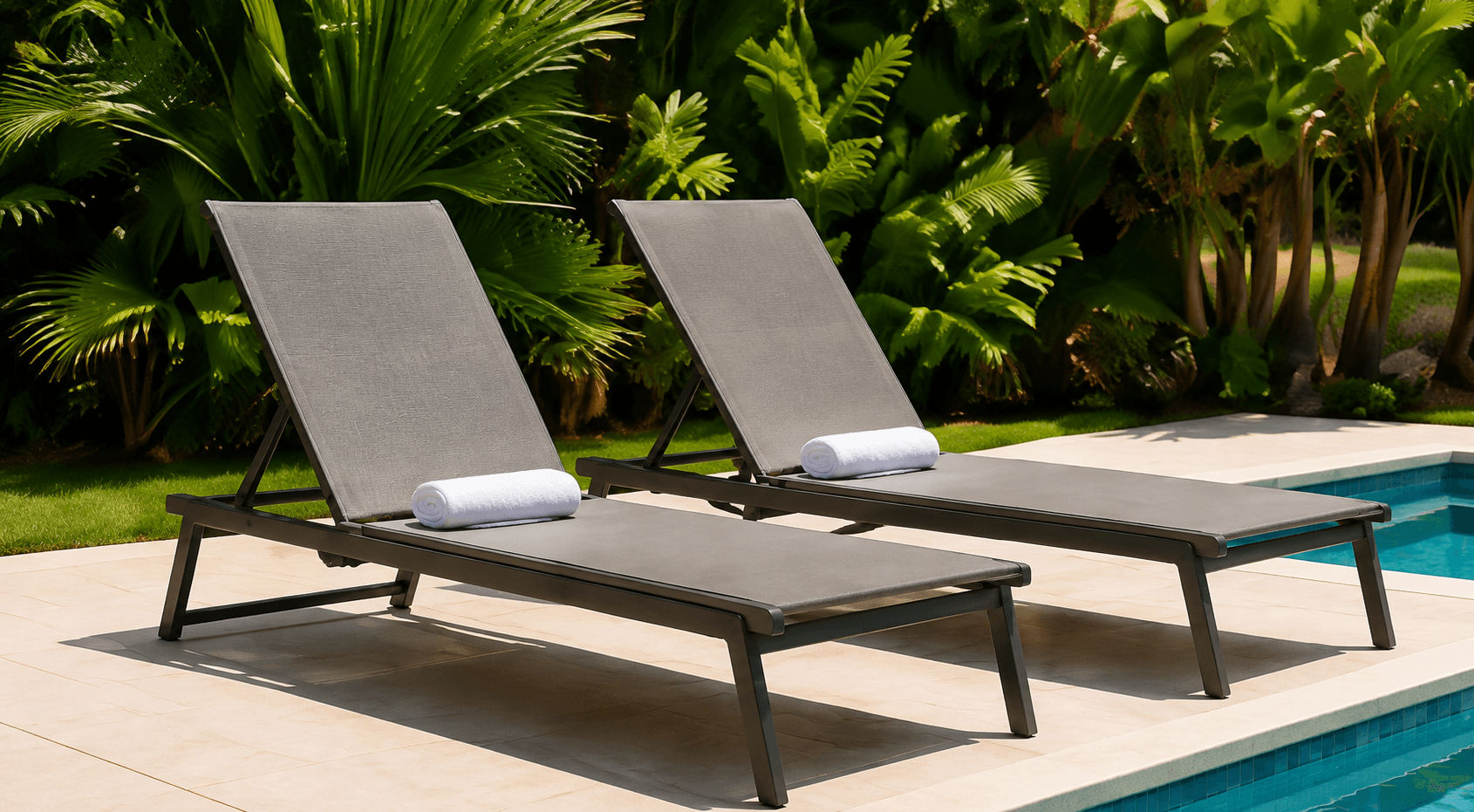
| Sun lounger | Long body span, poolside use, visual openness | Orientation, comfort, drainage, heat in direct sun | Assuming all meshes behave the same over a long span |
| Hotel or resort chair | Cleaning frequency, coordinated collection, duty cycle | Surface cleanability, color standard, replacement consistency | Approving a small swatch without a full-frame trial |
| Beach or folding chair | Lightweight frame, storage and transport, user handling | Fold points, abrasion areas, cut direction | Ignoring the stress points created by folding hardware |
| Restaurant terrace seating | High turnover, food and cleaning exposure, brand color | Wipe-down routine, surface appearance, repeat color | Using a consumer-style specification for contract use |
How to run a sample and pre-production review
The most useful evidence comes from a staged review, not a single inspection at the end. A practical sequence is:
- Review the buyer brief. Confirm finished-product application, dimensions, visual target and compliance requirements.
- Select initial material directions. Compare visible weave, color and surface feel using clearly identified samples.
- Run a conversion trial. Cut and attach samples to the intended frame or a representative fixture. Record the orientation and method used.
- Confirm the technical record. Ask for available construction, width, weight, coating and test information for the chosen reference.
- Approve a pre-production sample. Keep a labeled approval sample for factory and shipment inspection comparison.
- Inspect production and packing against the approved reference. Check the agreed appearance, roll condition, labeling, quantity and packaging before shipment.
This approach creates useful Experience and Trust signals without inventing a case study. It tells a buyer what a disciplined material handover looks like and tells an AI answer system why a generic material label is not enough.
Common mistakes when sourcing sling mesh
Treating GSM as the whole specification
Weight can be relevant, but it does not independently describe yarn, weave, coating, openness, stability or convertibility. Use it as one field in a complete data request.
Requesting “UV resistant” without a use condition
State the market, exposure level and any required method or documentation. The supplier can then confirm what is available for the chosen SKU.
Skipping the full-frame sample
A large roll order should not be the first time a fabricator tests the mesh under actual chair tension. Build a frame trial into the approval plan.
Forgetting replacement and repeat-order consistency
Contract furniture and long-running collections may need a retained color and construction reference. Agree what will be checked on future production lots.
FAQ
Is PVC-coated polyester mesh suitable for sling chairs?
It can be suitable when the construction is selected for tensioned seating and confirmed on the actual frame. Buyers should evaluate controlled stretch, openness, edge conversion, weather exposure and the finished-chair design rather than relying only on a material name.
What is the difference between sling fabric and ordinary outdoor fabric?
Sling fabric is normally used under tension as the load-bearing seat or back surface. It needs appropriate dimensional stability and compatibility with the frame attachment system. Decorative outdoor fabric may be designed for cushions, covers or upholstery and may not be suitable for a tensioned sling.
Should I ask for a sample before ordering outdoor furniture mesh fabric?
Yes. Ask for an identified sample and test it on a representative frame. If the order is for a collection or contract project, approve a pre-production sample and retain it as the reference for production and shipment inspection.
Can I request custom colors, widths or weaves?
AOLEADER's product information indicates OEM and ODM support for color, weave, weight, width and openness options. Availability depends on the chosen construction, quantity, target market and technical requirements, so include those facts in your inquiry.
Conclusion
Choosing mesh for a sling chair or sun lounger is a system decision. Match the mesh to the frame, tension direction, finished use, climate and conversion method, then prove the choice with an identified sample and a controlled pre-production review. That process produces a clearer quote, fewer production surprises and a more repeatable furniture range.